Welcome to our technical resource centre! If it’s technical know-how, common questions, tiling best practices and application guidance you’re looking for, Ezee Tile presents a central hub of information for all your tiling requirements. Find the latest and best technical content as well as interactive tools to help make your next tiling project a little easier.
Technical Support
In addition, Ezee Tile offers dedicated after-sales and on-site technical support. Our support services are designed to assist users in not only selecting the right products for their application, but also to provide advice and guidance when it comes to effective tile installations.
For on-site technical support, please call 011 872 0627
Please select from the links below to access a wide range of product, installation and support information.
Tiling Tips
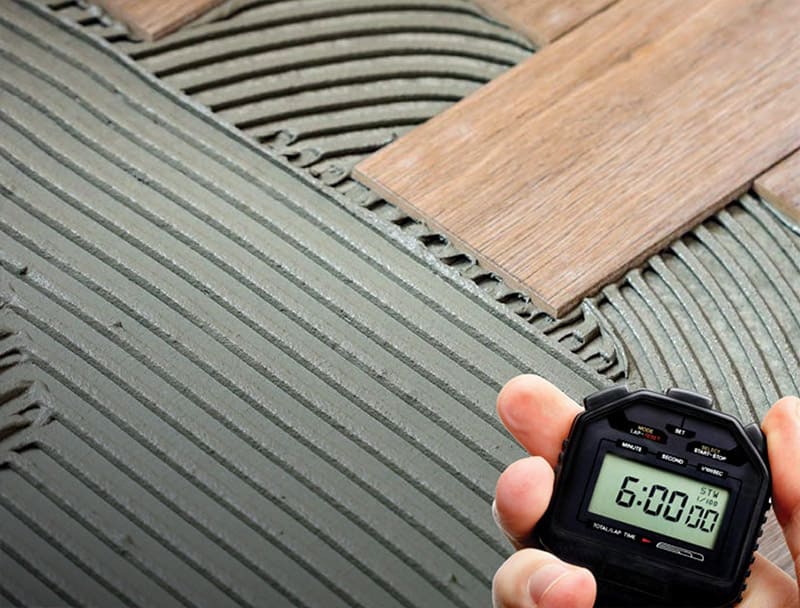
A professional-looking tile installation takes more than just choosing a beautiful tile design.
Product Selection Guide
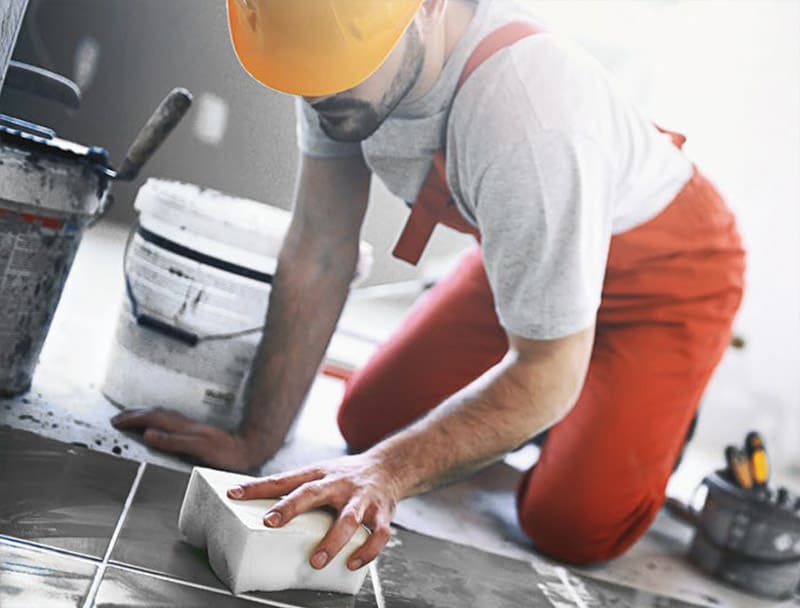
When it comes to choosing the right tiling materials for your project, Ezee Tile offers a wide range of tile adhesives, grouts and surface preparation products.
Colour Chart

Ezee Tile’s range of grouts are designed to match the aesthetics of any tile with a broad selection of colours to choose from.
FAQs
Ezee Tile has put together a collection of some of the most frequently asked questions about tiling and grouting, including choosing the right product for your needs and installation basics to help make your tiling project go that much smoother.
How does the application area affect the choice of Ezee Tile products required for my tiling installation?
There are 7 critical questions to consider before choosing your adhesive system for your tiling application. They are as follows:
-
- What tiles are selected for the installation?
- What is the existing surface to be tiled?
- Is the tiling installation on walls or floors?
- Is the tiling installation interior or exterior?
- Is the tiling installation often exposed to water?
- Is the tiling installation above ground floor level?
- Is the installation exposed to temperature changes?
What Ezee Tile product do I require for a tiling installation?
There are many key factors in selecting the correct Ezee Tile product for your project. Please feel free to call us on 011 872 0627 for our advice. For a quick reference, refer to the Ezee Tile.
How does cement work in a tile adhesive?
When water and cement are mixed together, the cement reacts with the water to form crystals which interlink and bond with the sand. These crystals also grow into the tile and into the substrate, locking the two together. This is called mechanical bonding.
The ratio between the sand and the cement are important in determining the strength of the adhesive. Too much or too little cement will weaken the adhesive, i.e. adding extra cement or sand will disrupt the balance and weaken the bond strength.
The mixing water is critical to the bonding reaction, too little or too much and the bond will be weaker.
How do additives improve a tile adhesive?
Working with cement and sand alone is quite difficult. Additives are used to improve the constancy of the tile adhesive. The additives thicken the adhesive, making them sticky which helps to stop tiles from slipping off the wall. The additives are also used to keep the water in the tile adhesive, which helps the cement form crystals and strengthens the bond. Tile adhesives that dry very quickly (< 5 mins) is a sure sign of a poor quality. The surface to be tiled must be clean and hard. A layer of dirt, paint, glue or wax will stop the cement crystals from growing into the concrete floor or wall and result in a weak bond. Because of this, any and all surface contaminants must be removed. Tiling onto a soft crumbling or cracked surface is like building a house onto sand. Eventually, the tiles will come loose. The cost to repair can be up to three times that of the initial cost if the correct procedure for surface preparation is not followed. During the curing process, an ordinary cement mortar (concrete, screed or render) undergoes a process known as hydration, which is the reaction between cement and water. During this process, there will be a certain degree of movement in the substrate as a result of shrinkage caused by the hydration reaction as well as evaporation of the water from the mix. The majority of this reaction occurs within 28 days. If the tiles are fixed before hydration has fully taken place, there will be differential movement between the tiles and substrate, resulting in a tile failure (i.e. the tiles cracking or lifting or both). A further factor to be considered is that, should the moisture content of the substrate be too high, this could adversely affect the curing of the tile adhesive, weaken the strength of the tile adhesive and/or cause the tiles to delaminate from the substrate. Ezee Tile material specifications are based on SABS 10107: 2011 – the design and installation of ceramic tiles. New walls and floors must be allowed to cure for minimum periods as listed below to ensure that movement due to shrinkage does not affect the installation.
-
- Direct bedding onto new brick walls and concrete surfaces: 6 weeks
-
- New plaster walls: 2 weeks
-
- New screeded floors: 4 weeks
Why do I require a primer prior to tiling?
Ezee Tile Basecoat was specially formulated to be used in combination with Ezee Tile Keycoat for surface preparation prior to the installation of tiles. It is particularly recommended for the priming of the following types of substrates:
- Extremely smooth, dense surfaces, e.g. Power floated screeds
- Excessively porous surfaces, e.g. Concrete bricks
- Non-porous surfaces, e.g. Concrete bricks
- Flexible surfaces, e.g. Wood
- Surfaces that have been previously coated by paint or bitumen
Should these critical surface preparation products not be used, it could result in failure.
When should I use Ezee Tile Keycoat and Ezee Tile Basecoat?
The mixture of these two products should be applied whenever the surface to be tiled is excessively porous or excessively dense. Examples would be:
- Steel, wood or gypsum based surfaces
- Steel floated concrete surfaces
- Concrete bricks
- Surfaces that have glue or paint on them (these surfaces must be chipped)
- Tiling on top of previously laid tiles
Click here to find out more about Ezee Tile Keycoat & Ezee Tile Basecoat
Resources